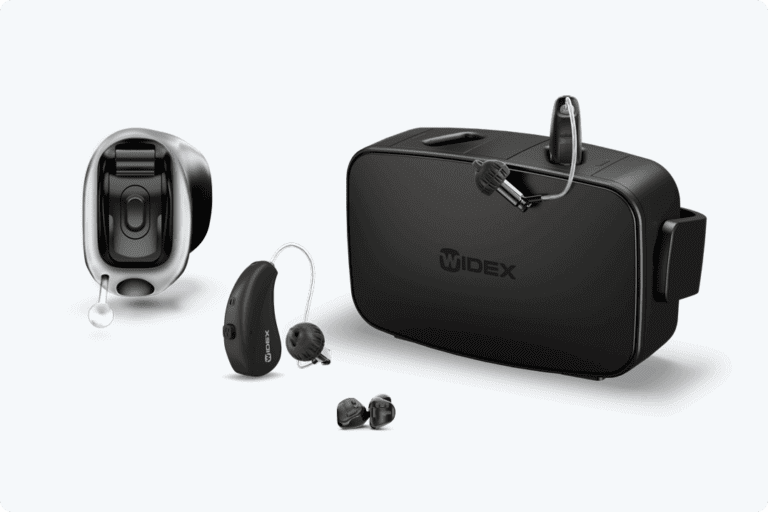

Hearing aids lift speech out of the noise and make it loud enough for the brain to detect, across every style, from invisible in-the-ear devices to behind-the-ear models, and across the brands we use, including Phonak, Oticon, Starkey, Signia, Widex, Unitron and Rexton. This guide explains what a device does, what it cannot do alone, and how each one works inside our Brain-Based Hearing Programme™, where the brain learns to decode the speech the device now lets it detect.
The same words, said once. Watch where they arrive whole.
Hearing loss is not only a loss of volume. A damaged cochlea changes the firing patterns sent up the auditory nerve, and over time the brain quietly adapts to that altered, incomplete input. So even after a device has cleaned away the noise and made the voice louder, the signal can still arrive in a shape the brain no longer reads as speech. Louder, but not clearer. That is the difference between detecting a word and understanding it.
A hearing aid removes background noise and amplifies the speech so the brain can detect it. This is what the technology does, and it does it well.
The auditory processing protocol sessions in the Brain-Based Hearing Programme™ teach the brain to decode the speech it can now detect, the way it once did.
The longer that altered input goes unaddressed, the more the brain settles into treating the thinner signal as normal, which is why acting sooner, and then giving the brain something to relearn from, tends to matter more than any single feature on a specification sheet. It is also why two people in the very same hearing aid can have completely different experiences, and why everything below treats the device as the beginning of the work rather than the end of it.
If you find yourself turning the television up, asking people to repeat themselves, or losing the thread of a conversation in a busy room while managing one to one, those are the everyday signs that an assessment is worth booking. The right type of hearing aid is less about the device itself and more about how well it suits your hearing, your life and your hands.
Whatever the choice, it is verified with real-ear measurement and a personalised fitting so the device performs to prescription in your own ear, and that fitting is where the Brain-Based Hearing Programme™ begins.
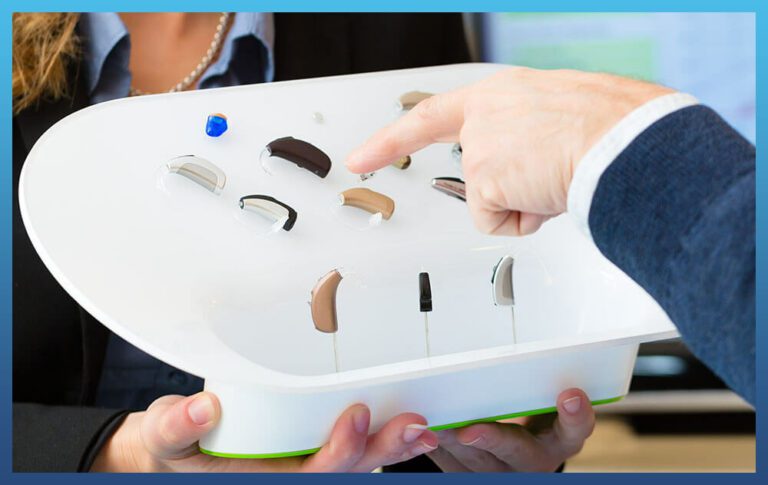
Hearing aids come in a handful of recognised styles, defined mostly by where the device sits and how visible it is. Every style can carry today's signal processing, so the choice is about fit, dexterity and discretion. Whichever you wear, the device is the housing for the signal the programme then teaches your brain to read.
The most popular style for most people. A slim unit sits behind the ear with a tiny speaker in the canal, giving natural sound and discretion across mild to severe loss.
Read moreThe whole device sits behind the ear, connected to the canal by an earmould or tube. Robust, easy to handle, and powerful enough for more significant hearing loss.
Read moreA custom-moulded device filling the outer ear, with controls that are simple to reach. A natural middle ground between discretion and ease of handling.
Read moreSmaller than an in-the-ear device and seated mostly within the canal, for a more discreet custom fit while keeping reasonable battery and feature room.
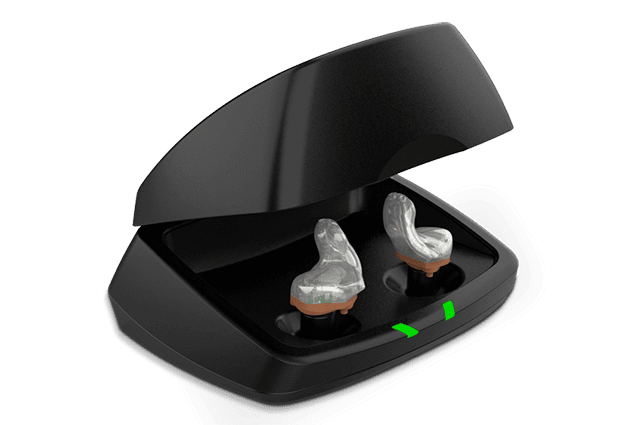
Read moreAmong the most discreet, smallest hearing aids, sitting fully inside the canal with nothing behind the ear. Some are custom-moulded to your ear, while others are instant-fit, ready-to-wear devices that need no impression.
Read moreThe most discreet option of all. These small, invisible hearing aids sit deep in the canal and are effectively unseen in everyday wear, with several now offering Bluetooth.
Read moreMost in-the-ear and in-the-canal devices are moulded to the exact shape of your ear from an impression, for a secure, personal fit. The distinction worth knowing is that not every completely-in-canal device is custom, some are instant-fit and ready to wear, which is the line between a moulded device and an off-the-shelf one.
Read moreSome of the most useful solutions look nothing like a standard hearing aid. These are areas where our audiologists have genuine clinical depth, and where the right answer depends on getting the diagnosis right first.
When the outer or middle ear cannot pass sound normally, a bone-anchored device or a bone conduction headband sends sound through the skull straight to the working cochlea, bypassing the blockage. It is a different route to the same destination, a clean signal delivered to the brain, and it is available as a soft headband for children. The signal is only the start, and the auditory processing protocol sessions then help the brain make full use of what it now receives.
Read moreHearing aids built into the arms of your glasses, including bone conduction spectacles, so your hearing and your eyewear work as one. They suit people who wear glasses all day and would rather not have a separate device behind the ear. The glasses carry the signal to the ear, and the programme is what teaches the brain to turn it back into speech.
Read moreThe Phonak Lyric is placed deep in the ear canal by an audiologist and worn continuously for months at a time, completely invisible, with no daily handling or charging. Sitting so close to the eardrum, it uses your ear's own anatomy to deliver remarkably natural sound. Like every device it provides the detection that the auditory processing protocol sessions then teach the brain to decode.
Read moreFor auditory processing disorder, the ears can test normal while the brain struggles to make sense of sound, especially in noise. Low-gain hearing aids give the brain a cleaner, steadier signal to work with, and paired with auditory processing protocol sessions they retrain how that signal is decoded. This is the detect-then-decode principle in its purest form, which is why it sits at the heart of what we do.
Read moreWe also fit CROS and BiCROS systems, which carry sound from an unaidable ear across to the better ear, a common solution for single-sided deafness. Several of these conditions look alike from the outside and only careful testing tells them apart, which is why the first step is always an assessment rather than a device. Getting that diagnosis right is also what lets the programme target the real problem, whether it sits in the ear, in the pathway, or in how the brain has learned to handle the sound it receives.
Sometimes the starting point is not a style but a particular need. These are the most common, and each connects to the same underlying work of helping the brain make sense of sound again.
Where tinnitus sits alongside hearing loss, a hearing aid programmed for tinnitus can ease it, often combined with gentle sound therapy. This is the entry point to our NeuroQuiet Tinnitus Programme™, which retrains the brain to habituate to the sound over time.
Read morePaediatric hearing aids are built for developing ears and the demands of the classroom, where hearing is also how a child learns to speak and read. Our children's service supports families through testing, fitting and follow-up.
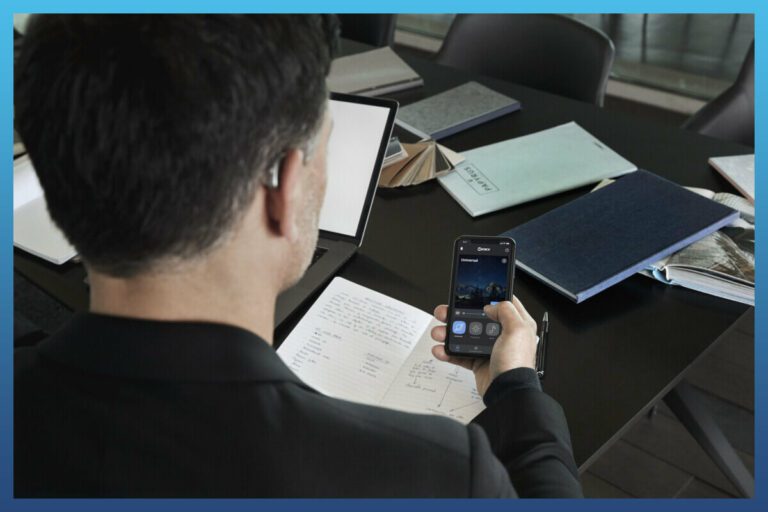
Read moreBluetooth hearing aid technology streams calls, television and music straight to your ears, and the newest devices add Auracast and LE Audio to receive sound from public venues. Available across most styles, including some invisible models.
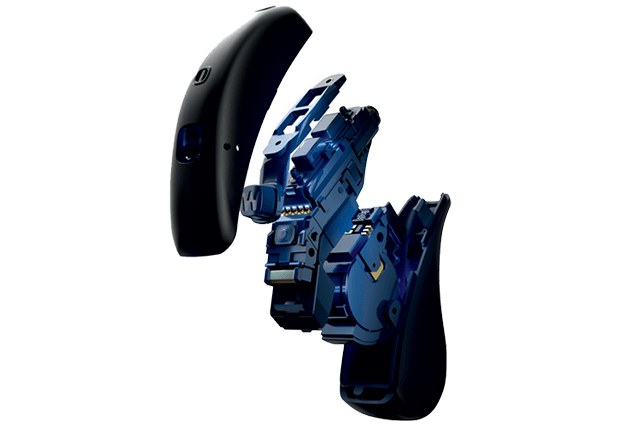
Read moreBecause we are independent, we work with the full range of leading manufacturers and choose the device that genuinely suits your ears. No single manufacturer is right for everyone, so the choice rests on your hearing, your ear shape and the way you live, which is precisely what the assessment settles. Below is the current platform for each. They are remarkable pieces of engineering, and in our hands each one is the first step of the programme, the part that gets a clean, well-chosen signal to the brain so the auditory processing protocol sessions can teach the brain to read it.
A dedicated DEEPSONIC AI chip lifts the voice out of the noise before it reaches the ear, handing the brain a cleaner signal to work with.
Read moreThe G3 Neuro Processor uses a dual deep neural network to handle noise, with health tracking built in, down to invisible custom styles.
Read moreBuilt on the idea that we hear with the brain, not the ears. Its 4D sensors and onboard neural network present the whole sound scene.
Read moreTracks several speakers at once for busy conversation, and keeps your own voice sounding natural, a quiet reason people keep wearing it.
Read moreThe most natural, least-processed sound in the field, with near-zero delay on the W1 chip. A favourite for music and for tinnitus support.
Read moreA flexible try-then-decide approach that lets you experience a technology level in your own life and step up later if you need to.
Read moreMulti-Voice Focus scans the room a thousand times a second to follow group conversation, in some of the most hard-wearing devices made.
Read moreMost new hearing aids are now rechargeable, though disposable batteries still have their place. Which suits you comes down to dexterity, habits and how you use your device, rather than one being better than the other.
A little routine care keeps a hearing aid sounding its best and lasting longer. Two small parts do most of the work, and both are simple to replace at home once you have been shown how.
We show every patient how to change a wax guard and a dome, and our care plans keep your devices serviced and fine-tuned for the long term.
The fitting matters far more than the device alone. A hearing aid set up by ear and never verified will rarely perform to its potential, which is why our process looks the way it does.
At the fitting we use real-ear measurement, the gold-standard verification that places a tiny probe in your ear to confirm the device is delivering exactly the prescription your hearing needs. Without it, fitting is guesswork. We also offer remote fine-tuning, so adjustments can often be made without a return trip. This is also where the Brain-Based Hearing Programme™ takes over, because a perfectly fitted device still hands the brain a signal it has to learn to read again.
You can experience hearing aids during a structured trial before deciding, in your own environments rather than only in a quiet clinic. For those who cannot travel to us, our home visit service brings the assessment and fitting to you.
Hearing changes, and so does the way the brain uses a device, so the work does not end at the fitting. We review and fine-tune over time, adjust as your hearing shifts, and keep the auditory processing protocol sessions of the programme moving alongside the technology. A device looked after well, and a brain that keeps practising, is what turns a good first day into a lasting result.
For a decision about your hearing, who fits your devices matters as much as which device you choose. Our audiologists hold a minimum of an MSc in Audiology from leading universities and are registered with the Health and Care Professions Council, and as an independent clinic our recommendations sit with you and your ears rather than with any one manufacturer.
What sets us apart most is the approach. Real-ear measurement is standard rather than an upgrade, fine-tuning can be done remotely, and our Brain-Based Hearing Programme™ and NeuroQuiet Tinnitus Programme™ treat the device as the first step and then retrain the brain to make sense of the signal it delivers. And because we believe good hearing should reach further than our own clinic, ten percent of our hearing aid proceeds funds hearing care for deaf children in Africa.
Experience matters here too. Our audiologists fit across the full range of devices every week, in two London clinics, so the recommendation you receive is shaped by what we have seen work in real ears and real lives. We explain our reasoning at every step, put the findings in plain language, and stay with you long after the fitting, because hearing is not a problem solved once but a system kept in tune. That ongoing relationship is where the lasting results are made.
Most hearing aids last around four to five years with good care, sometimes longer. Wax guards and domes are replaced routinely, and the device itself is eventually retired as both the technology and your hearing move on. Regular servicing extends their life considerably.
Yes. A structured trial lets you experience the technology in your own environments, the places that actually matter, rather than only in a quiet clinic room, and the fitting is adjusted to what you report back.
For most people, yes. A single overnight charge lasts a full day, there are no fiddly batteries to handle, and the sealed design resists moisture. Disposable batteries still suit some very small custom devices and heavy travel days.
It depends on you. Rechargeable suits most people and is kinder on the hands. Disposable batteries suit those who want an instant swap with no charging, and remain useful in the smallest custom styles. We help you weigh this at the fitting.
Hearing aids do not normally cause vertigo. Occasionally a new sound experience, or earwax pushed by a device, can cause brief dizziness, which settles. Persistent vertigo has other causes and should be assessed, so let us know if it occurs.
They can. For auditory processing disorder, where the ears test normal but the brain struggles to make sense of sound, low-gain hearing aids combined with auditory processing protocol sessions can help. This is exactly the detect-then-decode work our Brain-Based Hearing Programme is built around.
Wipe them daily with a dry cloth, keep the microphone ports clear, change the wax guard when sound drops, and dry them overnight. Avoid water and wipes with alcohol. We show every patient the routine at the fitting.
If both ears have hearing loss, two is almost always better. The brain uses both ears together to locate sound and to separate speech from noise, so working on only one ear leaves that work half done. Where only one ear is affected, a single device or a CROS solution may be right.
A Brain-Based Assessment looks at both the ear and the way your brain processes sound, so the question of which hearing aid, in which style, answers itself. Book online, call us, or send a short email.
1 Harley Street, London W1G 9QD
Monday to Saturday, evenings until 7pm
0203 011 1280
[email protected]
126 Wigmore Street, London W1U 3RY
Monday to Saturday, evenings until 7pm
0203 011 1280
[email protected]
This guide is for information and does not replace a personal assessment. If you have concerns about your hearing, please book an appointment or speak to a qualified audiologist.